Politics
Number of Unhoused Chicagoans Dropped 60% But Remains at All-Time High, Survey Found
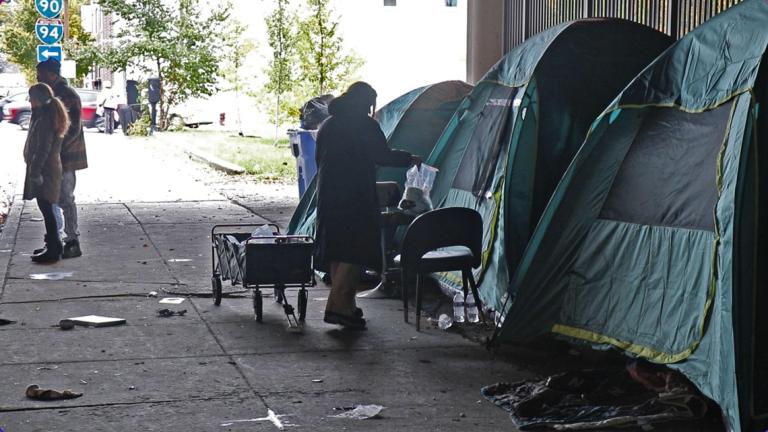
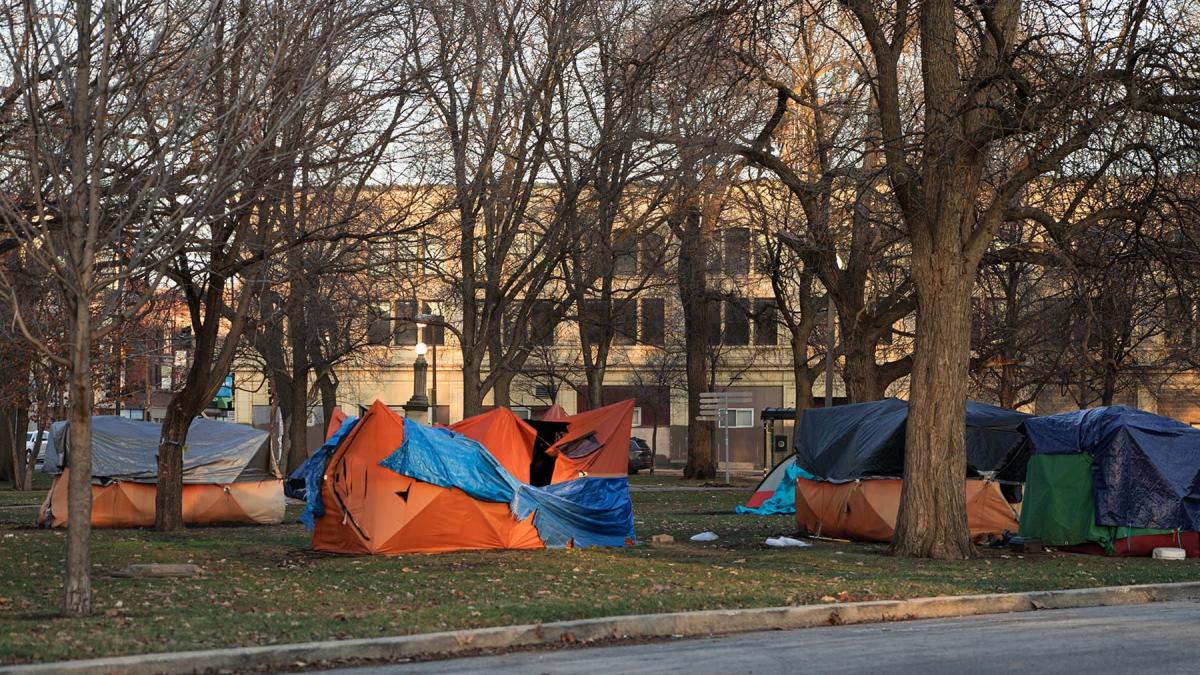 A homeless encampment in Humboldt Park is pictured in a 2024 file photo. (Michael Izquierdo / WTTW News)
The number of Chicagoans living in city shelters or on city streets dropped 60% between January 2024 and January 2025, according to the annual survey used by federal officials to track homelessness, but remains at an all-time high for longtime residents, city officials announced Thursday.
More than 7,450 people in Chicago lacked a permanent place to sleep, according to the annual “point-in-time” count, which sends volunteers out to count the number of unsheltered people on the city’s streets on a single night and is used by U.S. Department of Housing and Urban Development officials to determine federal funding levels. The 2025 count took place on Jan. 23.
Maura McCauley, acting commissioner for the Chicago Department of Family and Support Services, said city officials were “extremely happy” that the count reflects efforts to make homelessness in Chicago rare, brief and non-reoccurring.
In spite of that apparent progress, more people were unhoused in Chicago in January 2025 than at any point since Chicago began conducting this annual survey in 2005, city officials said.
That significant drop reflects the end of the city’s dedicated effort to care for migrants who make their way to Chicago after crossing the southern border. In all, more than 51,000 “new arrivals” made their way to Chicago from the southern border after requesting asylum, many on buses paid for by Texas Gov. Greg Abbott.
The number of longtime Chicagoans who are unhoused grew by 38% between January 2024 and January 2025, according to the survey. That comes on top of a 25% increase in homelessness among longtime Chicagoans between January 2023 and January 2024, according to the survey.
By contrast, the number of Chicagoans city officials consider to be “newcomers,” people who were born in another country but recently arrived in Chicago dropped 90% between January 2024 and January 2025, as compared with the number of “new arrivals” living in city shelters a year ago, according to the survey.
Approximately 17% of people living in Chicago’s shelters are newcomers, according to the 2025 survey.
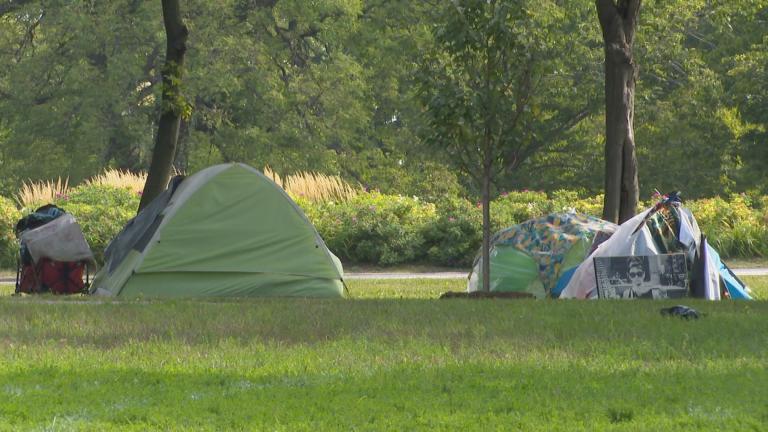
More than 1,300 Chicagoans were completely unsheltered on the city’s streets at the time of the survey, an 18% drop from the 2024 survey, according to the results.
Approximately 53% of Chicagoans experiencing homelessness and living in shelters are Black, while 70% of the people living on the city’s streets are Black.
Black Chicagoans make up less than 29% of the city’s population, according to the 2020 census.
Black Chicagoans have long been more likely to be unhoused than White, Asian or Latino Chicagoans, and city officials are determined to reverse that trend, officials said.
Children account for approximately one-third of Chicago’s unhoused population, unchanged from last year, according to the survey.
The Chicago Coalition to End Homelessness and other advocates for the unhoused believe the methodology used by the “point-in-time” count is woefully inadequate, since it does not consider people living “doubled-up” with friends or relatives temporarily to be homeless.
Instead, federal officials only consider people who do not have “a fixed, regular, and adequate nighttime residence” outside a shelter to be homeless.
More than 76,300 people experienced homelessness in Chicago in 2022, according to the coalition’s most recent report, released in December 2024.
Weeks before the annual count took place, city, state and county officials transitioned to a unified shelter system that cares for the newest Chicagoans as well as longtime residents who are unhoused.
Officials said the new approach, known as the One System Initiative, successfully streamlined operations and reduced the exorbitant cost of operating the migrant shelters, officials said.
The city’s shelter system has beds available for families experiencing homelessness, but is struggling to provide enough beds for single people who need shelter, officials said. Approximately 200 people contact city officials every day for help finding somewhere to sleep, officials said.
The city faces a shortage of at least 120,000 affordable homes, officials said.
However, maintaining that progress will be exceedingly difficult as the Trump administration slashes funding for services designed to help the unhoused and federal COVID-19 relief aid expires, Chief Homelessness Officer Sendy Soto said.
Mayor Brandon Johnson remains committed to expanding the city’s efforts to help house Chicagoans experiencing homelessness, Soto said.
Contact Heather Cherone: @HeatherCherone | (773) 569-1863 | [email protected]